Matthew 4:12–23 (King James Version)
Now when Jesus had heard that John was cast into prison, he departed into Galilee;
And leaving Nazareth, he came and dwelt in Capernaum, which is upon the sea coast, in the borders of Zabulon and Nephthalim:
That it might be fulfilled which was spoken by Esaias the prophet, saying,
The land of Zabulon, and the land of Nephthalim, by the way of the sea, beyond Jordan, Galilee of the Gentiles;
The people which sat in darkness saw great light; and to them which sat in the region and shadow of death light is sprung up.
From that time Jesus began to preach, and to say, Repent: for the kingdom of heaven is at hand.
And Jesus, walking by the sea of Galilee, saw two brethren, Simon called Peter, and Andrew his brother, casting a net into the sea: for they were fishers.
And he saith unto them, Follow me, and I will make you fishers of men.
And they straightway left their nets, and followed him.
And going on from thence, he saw other two brethren, James the son of Zebedee, and John his brother, in a ship with Zebedee their father, mending their nets; and he called them.
And they immediately left the ship and their father, and followed him.
And Jesus went about all Galilee, teaching in their synagogues, and preaching the gospel of the kingdom, and healing all manner of sickness and all manner of disease among the people.
Beginning Where We Stand
Beginnings rarely announce themselves as such. They often arrive disguised as endings, interruptions, or quiet dislocations. John is imprisoned. Jesus moves. A new chapter opens, not in a centre of power, but along a shoreline where ordinary work continues.
In Masonry, we are taught to begin where we stand. The work does not wait for ideal conditions. It begins with what is at hand, with tools already worn, with lives already underway. This passage speaks to that realism with unusual clarity.
Movement born of constraint
The story begins with limitation. John’s imprisonment is not incidental; it sets the stage. Something has closed, and in response, something else opens. Jesus departs, not in retreat, but in redirection.
I have noticed how often change comes this way. Rarely by preference. More often by necessity. Masonry prepares a man to respond to circumstance without surrendering principle. The direction may change; the orientation does not.
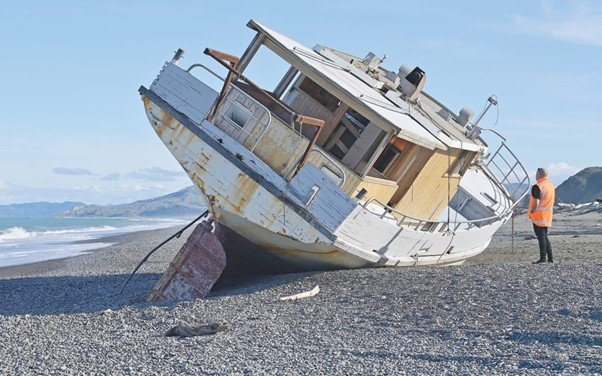
[Image — a shoreline under muted light, sea calm and wide]
Galilee is not chosen for prestige. It is chosen because it is there. The light Isaiah promised appears not where one might expect, but where people are already sitting in shadow.

Light that interrupts ordinary labour
The fishermen are working. Nets are cast, mended, handled with practiced ease. There is no spiritual preparation described, no pause for reflection. The call arrives in the middle of the task.
This matters. Vocation here does not descend upon leisure, but upon labour. In the Craft, insight often comes not in retreat, but in repetition. The hands teach the heart.
To leave the nets is not romantic. It is costly. These are not symbols; they are livelihoods. The immediacy of their response unsettles me. I am slower to release what is familiar, even when I sense a truer direction opening.
Repentance as reorientation
“Repent: for the kingdom of heaven is at hand.” The word is often misunderstood as sorrow alone. Here it feels closer to turning, to facing a new bearing.
Masonry understands this kind of repentance. It is not self-condemnation, but adjustment. The square is brought to the work again. The line is checked. Correction is an act of care.
The nearness of the kingdom does not remove responsibility; it intensifies it. What is close must be attended to. What is at hand cannot be deferred.
Leaving, without contempt
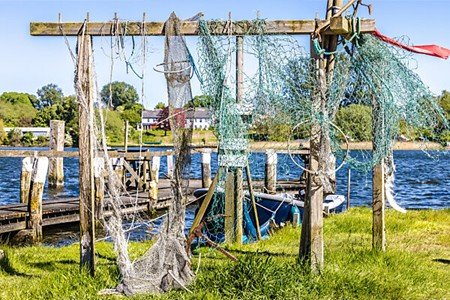
The text is careful. The fishermen leave their nets, but the nets are not despised. James and John leave their father, but he is not rejected. The call creates movement without contempt.
The call often comes while our hands are full.
This restraint feels important. Growth that requires disdain is brittle. Masonry teaches respect for what has formed us, even when we must move beyond it. The past is not an enemy; it is a foundation.
I have learned that how one leaves matters as much as where one goes. Abruptness may be faithful, but bitterness is not required.
A work that spreads quietly
The passage ends with motion across Galilee: teaching, healing, attending to people where they are. There is no strategy outlined, no hierarchy established. The work spreads by presence.
This is familiar. In Lodge, influence grows not by assertion, but by consistency. A man becomes known by how he shows up, not by what he claims.
A line that stays with me is this: the call often comes while our hands are full.
Matthew does not tell us what the fishermen felt as they walked away. He shows us only that they did. The story moves forward without explanation, trusting the reader to feel the weight.
The beginning here is quiet, grounded, and demanding. It asks not for preparation, but for response. Not for certainty, but for movement.
In that, it mirrors the Craft itself. We begin with what we have been given, where we are, and we learn to walk toward light that has already begun to rise.