
Psalm 31:9–16 (King James Version)
Have mercy upon me, O LORD, for I am in trouble: mine eye is consumed with grief, yea, my soul and my belly. For my life is spent with grief, and my years with sighing: my strength faileth because of mine iniquity, and my bones are consumed.
I was a reproach among all mine enemies, but especially among my neighbours, and a fear to mine acquaintance: they that did see me without fled from me.
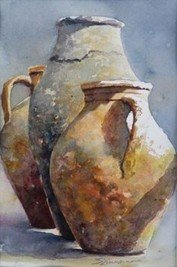
I am forgotten as a dead man out of mind: I am like a broken vessel.
For I have heard the slander of many: fear was on every side: while they took counsel together against me, they devised to take away my life. But I trusted in thee, O LORD: I said, Thou art my God. My times are in thy hand: deliver me from the hand of mine enemies, and from them that persecute me. Make thy face to shine upon thy servant: save me for thy mercies’ sake.
Worn Thin, Not Shattered
There are moments when life feels reduced to fragments. Not shattered dramatically, but worn thin through use and disappointment. The psalmist does not hide that experience. He names it plainly. Strength failing. Years spent sighing. A sense of being avoided, forgotten, quietly set aside.
What strikes me first is the honesty of it. There is no attempt to sound composed. No effort to frame suffering as improvement. The language is personal, bodily, immediate. Grief is not abstract here. It settles into the eyes, the bones, the breath.
I have known seasons when that description felt uncomfortably accurate. When the sense of usefulness seemed to slip away, and familiar relationships felt altered without explanation. The image of a broken vessel is particularly stark. Not destroyed, but no longer trusted to hold what it once did.
A Vessel Acknowledged Honestly
In the work of Freemasonry, care is taken with what is entrusted. Tools are handled deliberately. Materials are respected according to their purpose. A vessel that is cracked is not condemned, but it is acknowledged honestly for what it can and cannot bear. There is no shame in that acknowledgment. There is only clarity.
The psalmist’s distress is compounded by proximity. It is not distant enemies alone that trouble him, but neighbours and acquaintances. Those who know him best have become sources of fear. That cuts deeper than open hostility. It introduces uncertainty into places that once felt safe.
Fear, he says, is on every side. The phrase suggests enclosure. Pressure from all directions. It is the kind of fear that does not allow rest, because there is no obvious place to withdraw.
Fear on Every Side
And yet, in the middle of this compression, the psalm turns. Not toward explanation, but toward trust. But I trusted in thee, O LORD. The word but matters. It does not deny what comes before it. It stands alongside it.
Trust here is not optimism. It is not confidence that circumstances will quickly improve. It is an act of placement. My times are in thy hand. Time itself is surrendered. Not just outcomes, but duration. The long stretches as well as the brief ones.
This has always felt like one of the hardest prayers to make. It asks for release from the need to control pace. To accept that seasons unfold according to a wisdom not immediately visible.
My Times in Thy Hand
In the lodge, patience is not praised loudly, but it is expected. Work proceeds step by step. Progress is measured over years rather than moments. The temptation to hurry is understood, but resisted. What is rushed rarely holds.
The psalmist does not pretend that trust removes danger. He still asks for deliverance. Still names enemies. Still longs for relief. Faith does not require the suppression of desire. It simply orders it.
What steadies him is not the absence of threat, but the conviction that his life is held. Not loosely, not accidentally, but intentionally. The hand that holds his times is the same hand that makes the face shine.

Held, Not Overlooked
That image is gentle. It does not suggest force. It suggests attention. To be seen fully, even when diminished, even when broken.
I have often struggled with the feeling of being overlooked. Of effort going unnoticed. Of quiet faithfulness receiving no affirmation. Psalm 31 does not correct that feeling by denying it. It counters it with a deeper recognition. Being held is not the same as being applauded.
The psalm’s movement teaches me something about endurance. Not the endurance of stubbornness, but of consent. A willingness to remain where one is placed without despairing of being forgotten.
Endurance Without Despair
This does not come naturally to me. I am inclined to measure my value by usefulness. When usefulness wanes, unease follows. The psalm offers another measure. A vessel may be cracked and still be kept. Still be held.
There is a line that lingers quietly beneath the surface of this passage. The psalmist does not say his times were once in God’s hand. He says they are. Present tense. Even now. Especially now.
The closing request is simple. Make thy face to shine upon thy servant. It is not a demand for change, but for presence. For the assurance that the one who holds time also looks upon the one held.
Light Enough to Remain
This feels like a prayer shaped by long experience. One that has learned not to ask for explanations, but for light enough to remain steady where one stands. In my own life, I return to this psalm when patience thins. When fear presses close. When I am tempted to believe that being unseen is the same as being abandoned.
The words do not resolve everything. They do not restore what has been lost. But they reframe the moment. They remind me that broken vessels are not discarded. They are handled with care.
To be held in the hand of God is not to be spared difficulty. It is to be spared meaninglessness. That is enough to carry me through another day.