Isaiah 11:1–10 (King James Version)
And there shall come forth a rod out of the stem of Jesse, and a Branch shall grow out of his roots:
And the spirit of the LORD shall rest upon him, the spirit of wisdom and understanding, the spirit of counsel and might, the spirit of knowledge and of the fear of the LORD;
And shall make him of quick understanding in the fear of the LORD: and he shall not judge after the sight of his eyes, neither reprove after the hearing of his ears:
But with righteousness shall he judge the poor, and reprove with equity for the meek of the earth: and he shall smite the earth with the rod of his mouth, and with the breath of his lips shall he slay the wicked.
And righteousness shall be the girdle of his loins, and faithfulness the girdle of his reins.
The wolf also shall dwell with the lamb, and the leopard shall lie down with the kid; and the calf and the young lion and the fatling together; and a little child shall lead them.
And the cow and the bear shall feed; their young ones shall lie down together: and the lion shall eat straw like the ox.
And the sucking child shall play on the hole of the asp, and the weaned child shall put his hand on the cockatrice’ den.
They shall not hurt nor destroy in all my holy mountain: for the earth shall be full of the knowledge of the LORD, as the waters cover the sea.
And in that day there shall be a root of Jesse, which shall stand for an ensign of the people; to it shall the Gentiles seek: and his rest shall be glorious.
At the Stump
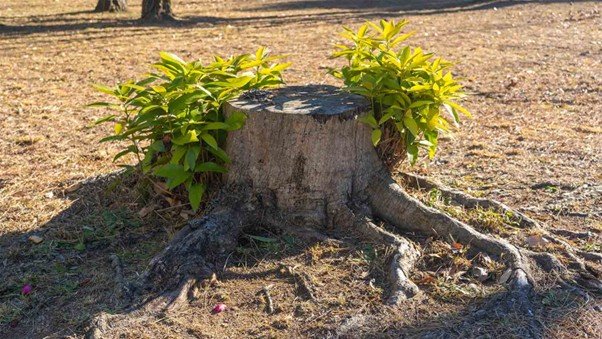
Isaiah begins this vision not with a throne, but with what looks like failure. A stump. Something cut back, reduced, unfinished. The house of Jesse is no longer described as flourishing. It has been brought low. And yet, it is precisely there — at the place of apparent ending — that new life is promised.
I find that detail impossible to rush past.
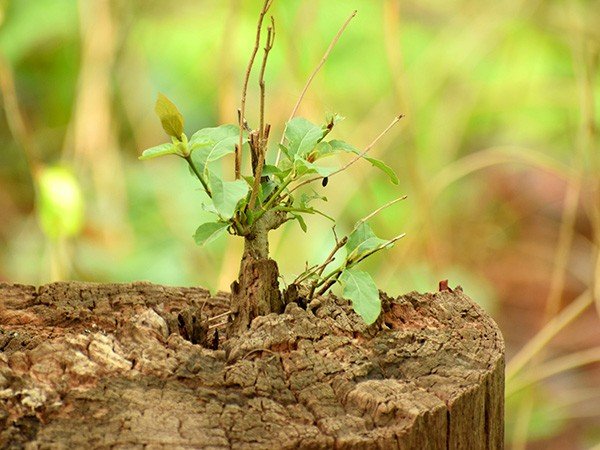
The branch does not grow from strength, but from what remains after strength has been stripped away. This is not renewal built on denial. It is growth that acknowledges loss and does not pretend otherwise.
There is a patience in this image that speaks quietly. Growth from roots is slow. Invisible at first. Nothing about it invites applause. Yet Isaiah insists that what emerges will bear a different kind of authority — one shaped not by spectacle, but by character.
The spirit described here is not singular. It is layered. Wisdom and understanding. Counsel and might. Knowledge and fear of the LORD. No one quality dominates. Power is balanced by restraint. Insight is paired with reverence.
This balance matters deeply. Authority that leans too heavily on strength becomes cruel. Insight without humility becomes manipulation. Isaiah’s vision insists that true rule is held together by proportion.
In Freemasonry, proportion is never accidental. Balance is not decoration. It is the condition that allows a structure to stand without strain. Excess in any direction weakens the whole.
Authority That Bends Low
The figure Isaiah describes does not judge by appearances. Sight and hearing are named, then set aside. Decisions are not made on impulse or surface impression. They are grounded elsewhere — in righteousness and equity.
I notice who receives attention first. The poor. The meek. Judgment here is not distant or abstract. It bends low enough to notice those who are usually overlooked. Authority turns its face toward those who have learned to live without it.
This challenges me. It is easy to admire the vision. It is harder to ask whether my own sense of order makes room for the quiet and the unseen.
A World Reordered
Then the vision shifts, and the language becomes unmistakably strange. Predators and prey lie down together. Instincts that once governed survival are re-formed. The world does not merely stop fighting. It forgets how to harm.
Isaiah is not offering a sentimental picture. He is describing a fundamental reordering. The conditions that made fear necessary are gone. Knowledge of the LORD fills the earth so completely that threat loses its function.
I am careful here. This is not a call to pretend that danger does not exist now. It is a promise that danger does not have the final word.

The presence of the child matters. Not as innocence alone, but as vulnerability without fear. The child leads, not because of strength, but because harm has been rendered obsolete. What once required caution no longer demands it.
This is not naïveté. It is the fruit of righteousness fully realised.
In the craft, we speak of building a place fit for all. This vision presses that language further than comfort allows. A house is not truly finished until the weakest can move freely within it.
Knowledge at the Root
Isaiah grounds this vision not in abstraction, but in knowledge. The earth shall be full of the knowledge of the LORD. This knowledge is not information. It is orientation. A shared understanding so complete that violence becomes unnecessary.
That kind of knowledge cannot be forced. It must be received, learned, lived into being. Like the branch, it grows quietly.
The passage ends where it began — at the root. What looked like an ending becomes an ensign. A signal raised not by conquest, but by trust. Others seek it freely. Rest gathers around it.

There is a line in this vision that stays with me through the week.
What grows from humility can bear more weight than what rises from power.
Isaiah does not invite me to predict when this vision will be complete. He invites me to notice where I place my hope now. Do I look for life only where success is obvious? Or am I willing to tend what remains after loss?
This passage teaches me that faithfulness often begins at the stump — with what has been cut back, reduced, and humbled — and trusts that the roots still know what to do.
For today, attending to that quiet growth is enough.
Memorable Phrase
What grows from humility can bear more weight than what rises from power.
Why This Matters
Because this vision relocates hope from spectacle to humility. It teaches that renewal begins where loss has stripped away illusion, that authority must be held in proportion, and that peace emerges not from force but from knowledge rightly received. It invites patient trust in what grows unseen, and quiet faithfulness at the root.