
John 3:1–17 (KJV)
“There was a man of the Pharisees, named Nicodemus, a ruler of the Jews:
The same came to Jesus by night, and said unto him, Rabbi, we know that thou art a teacher come from God…
Jesus answered and said unto him, Verily, verily, I say unto thee, Except a man be born again, he cannot see the kingdom of God.
Nicodemus saith unto him, How can a man be born when he is old? …
Jesus answered, Verily, verily, I say unto thee, Except a man be born of water and of the Spirit, he cannot enter into the kingdom of God…
The wind bloweth where it listeth, and thou hearest the sound thereof, but canst not tell whence it cometh, and whither it goeth…
For God so loved the world, that he gave his only begotten Son…
For God sent not his Son into the world to condemn the world; but that the world through him might be saved.”
Coming by Night
Nicodemus comes in darkness.
Not the darkness of ignorance, but the darkness of privacy. A time when questions can be asked without consequence, when uncertainty can be admitted without audience.
I recognise something of that instinct. The desire to wrestle with deeper matters away from the noise of the day, where reputation and expectation cannot overhear.
Some conversations can only happen in the dark.

The Question Beneath the Question
He asks carefully, respectfully, as one accustomed to measured speech. Yet beneath his words lies something more searching: a sense that what he knows is no longer enough.
To be told that one must be born again is not an answer but a disturbance. It shifts the ground entirely. It suggests that improvement is insufficient, that adjustment will not do.
Something far deeper must change.
The Work That Cannot Be Seen
“The wind bloweth where it listeth…”
This image settles quietly. The movement is real, but its source unseen. Its effect visible, but its origin mysterious.
There is a kind of inner work like this. Change that cannot be traced to a single moment. Growth that cannot be attributed to a single effort. A gradual reshaping that happens below the surface of awareness.
One does not see it happening. Only later does one realise that something has shifted.
Learning to See Differently
The words about seeing the kingdom suggest that vision itself must change. Not simply what is looked at, but how it is perceived.
This feels close to the Mason’s slow training of attention. The learning to look again at what seemed familiar. The recognition that depth is often hidden beneath the ordinary surface of things.
Perhaps this new birth is less about becoming someone else and more about seeing as though for the first time.
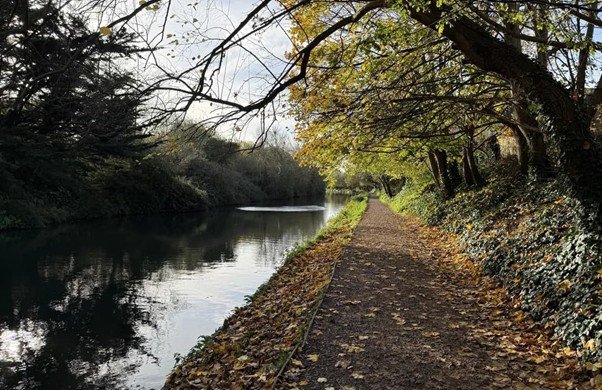
The Memorable Line
Some truths can only be spoken where no one else is listening.
The Patience of Love
“For God so loved the world…”
These words arrive without force. They do not press; they offer. Not condemnation, but patience. Not demand, but invitation.
In the quiet of this encounter, I sense that change is not driven by fear, but by being met with a depth of regard that makes transformation possible.
To be seen fully, and yet not rejected, is a powerful beginning.
Returning to the Daylight
Eventually, Nicodemus must leave the night and return to the day. The questions do not vanish, but they accompany him differently.
I imagine him walking back through familiar streets with a slightly altered awareness. Nothing outward has changed. Yet inwardly, something has begun.
And perhaps that is how most real change begins — quietly, privately, without announcement. A conversation in the dark that slowly teaches us how to walk in the light.