
James 5:7–10 (King James Version)
Be patient therefore, brethren, unto the coming of the Lord. Behold, the husbandman waiteth for the precious fruit of the earth, and hath long patience for it, until he receive the early and latter rain.
Be ye also patient; stablish your hearts: for the coming of the Lord draweth nigh.
Grudge not one against another, brethren, lest ye be condemned: behold, the judge standeth before the door.
Take, my brethren, the prophets, who have spoken in the name of the Lord, for an example of suffering affliction, and of patience.
Behold, we count them happy which endure. Ye have heard of the patience of Job, and have seen the end of the Lord; that the Lord is very pitiful, and of tender mercy.
James does not speak to people who are idle. He speaks to those already bearing weight. His call to patience is not an instruction to sit back or disengage. It is an appeal to hold steady under strain, to remain faithful when the work feels unfinished and the outcome delayed.
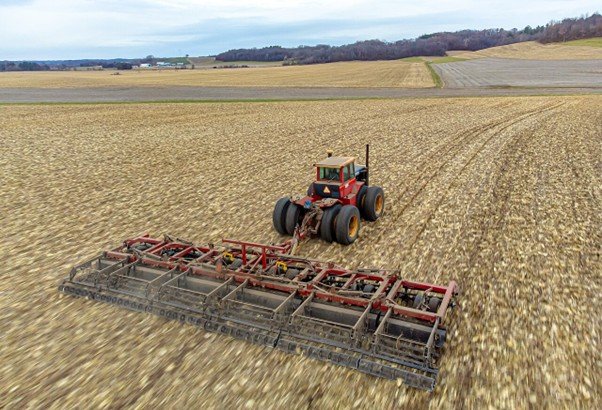
I notice that patience here is not passive. It is shaped by expectation. The farmer waits, not because nothing can be done, but because something is already underway beneath the surface. The soil has been worked. The seed has been sown. Waiting is part of the labour.
That distinction matters.
The image of rain is carefully chosen. The early and latter rains arrive in their own time. They cannot be summoned by anxiety or accelerated by effort. Yet without them, growth does not occur. The farmer’s patience is not optimism. It is knowledge of rhythm.
James invites his readers to learn that rhythm rather than resist it.
Waiting Within the Craft
In Freemasonry, we understand something similar. Not every stone can be set the moment it is cut. Some must wait for their place. Forcing them early weakens the structure. Waiting, when it is faithful, is part of the craft.
The instruction to stablish your hearts is quiet but demanding. Stability is not a feeling. It is a decision made repeatedly. Hearts are established by choosing where they will rest when pressure mounts.
The Danger Within Delay
James immediately names a danger that arises in waiting. Grudge not one against another. Delay strains relationships. When progress slows, irritation looks for a target. Impatience often turns inward, toward those standing closest.
This warning is practical. Communities are rarely undone by external opposition alone. They are weakened when waiting curdles into resentment.
The reminder that the judge standeth before the door is not meant to provoke fear. It is meant to reframe perspective. Accountability is near, not distant. How we treat one another while waiting matters as much as the work we hope will be completed.
Endurance With Meaning
James then gestures backward. The prophets are named, not as heroes beyond reach, but as companions in affliction. Their endurance did not shield them from suffering. It gave their suffering meaning.
Job is mentioned last, almost gently. His patience is not idealised as serenity. It is remembered as endurance that survived protest, confusion, and grief. What matters is not that Job was untroubled, but that he did not abandon the relationship in which he struggled.
The phrase the end of the Lord is striking. It does not mean the end of the story as humans write it. It refers to the purpose toward which God works. That purpose is named plainly. The Lord is very pitiful, and of tender mercy.
The Mercy That Holds Waiting
Waiting, then, is not suspended between indifference and chance. It is held within mercy, even when that mercy is not yet visible. There is a line in this passage that stays with me through the week. Waiting becomes heavier when we forget what it is for.
James teaches me that patience is sustained not by grit alone, but by remembrance. Remembering the rhythms of growth. Remembering the cost borne by those who came before. Remembering that mercy, not success, is the final measure.
In the craft, we sometimes speak of labour in silence. Not because nothing is happening, but because the work is inward. Stability is being formed where it cannot yet be seen.
For today, waiting faithfully is enough. Guarding the heart. Refusing resentment. Trusting that what has been sown will receive what it needs in its own time. The fruit will come. Until then, patience remains part of the work.
Memorable Phrase
Waiting faithfully is part of the work.
We should remember this because it reframes delay as purpose, reminding us that patience is not wasted time but faithful participation in what is still being formed.