
Romans 5:12–19 (King James Version)
Wherefore, as by one man sin entered into the world, and death by sin; and so death passed upon all men, for that all have sinned:
(For until the law sin was in the world: but sin is not imputed when there is no law.
Nevertheless death reigned from Adam to Moses, even over them that had not sinned after the similitude of Adam’s transgression, who is the figure of him that was to come.
But not as the offence, so also is the free gift. For if through the offence of one many be dead, much more the grace of God, and the gift by grace, which is by one man, Jesus Christ, hath abounded unto many.
And not as it was by one that sinned, so is the gift: for the judgment was by one to condemnation, but the free gift is of many offences unto justification.
For if by one man’s offence death reigned by one; much more they which receive abundance of grace and of the gift of righteousness shall reign in life by one, Jesus Christ.)
Therefore as by the offence of one judgment came upon all men to condemnation; even so by the righteousness of one the free gift came upon all men unto justification of life.
For as by one man’s disobedience many were made sinners, so by the obedience of one shall many be made righteous.
Moreover the law entered, that the offence might abound. But where sin abounded, grace did much more abound:
That as sin hath reigned unto death, even so might grace reign through righteousness unto eternal life by Jesus Christ our Lord.
A Weight Felt Before It Is Understood
There are passages of Scripture that feel heavy before they are understood, and this is one of them. Not heavy with accusation, but with consequence. Paul speaks here of something that passes through humanity, moving quietly and persistently, shaping lives long before anyone chooses it for themselves.
He uses the language of reigns and gifts, of obedience and disobedience, but what he is describing feels familiar in a more ordinary way. The way patterns repeat themselves. The way dispositions are inherited. The way one person’s failing becomes another person’s burden without being consciously handed over.

What Is Passed On Without Being Named
I have seen this at work in families, in workplaces, and in myself. A tone set early that continues long after the original voice has gone silent. A habit learned by watching rather than being taught. A hardness passed along not by intention, but by proximity.
Paul does not reduce this to psychology or social observation. He speaks of something deeper, something structural. Death passes upon all men, he says, not because each chooses it freshly, but because it has already entered the world. It is present before we begin.
This is not comforting language. But it is honest. It names the sense that something is already wrong before we add our own failures to it. That we are not beginning from a neutral place.
Beginning Where We Are Found
In the work of Freemasonry, there is an acceptance of this starting point. The stone is rough before it is touched. No explanation is offered for why it is so. The work simply begins where it is found. The task is not to deny the roughness, but to acknowledge it and labour patiently.
Paul’s argument turns on a contrast. The offence of one, and the obedience of one. He does not invite us to linger on the mechanics of this exchange, but on its direction. Something that once moved only toward loss now moves toward restoration.
When the Weight Shifts
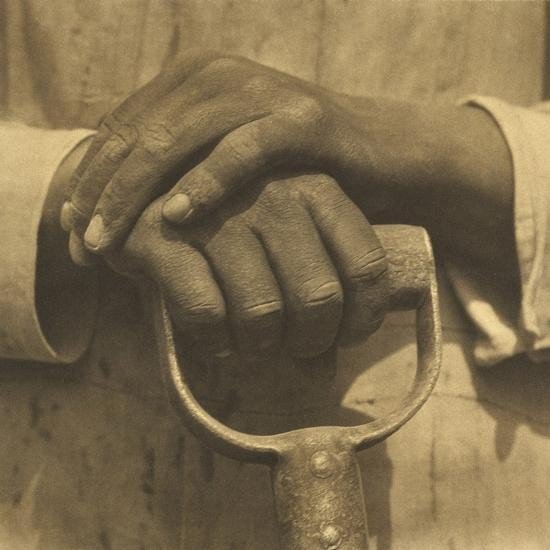
What strikes me most is that grace, in this passage, is not described as fragile. It is not easily overwhelmed. It does not merely balance the scales. It abounds. It exceeds. Where sin increases, grace increases more. The movement is asymmetrical. The weight shifts.
I have often struggled with the inherited nature of harm. It feels unjust. Why should one person carry the consequences of another’s failure? Paul does not answer that question directly. Instead, he reframes it. If harm can be shared without consent, so can restoration. If loss can pass through generations, so can life.
This is not an argument. It is an invitation to see the world differently. To recognise that we are already participating in something larger than our individual choices, for ill or for good.
What Reigns Through Us
In my own life, this has changed the way I think about responsibility. I am not accountable for everything that has shaped me, but I am accountable for what I pass on. What reigns through me does not end with me.
The passage speaks of reigning in life. That phrase can sound triumphant if read quickly. But Paul has already emptied it of bravado. This reign is not domination. It is not control. It is alignment. Life reigning where death once did.

A Shared Work, A Shared Outcome
There is a quiet dignity in that idea. It suggests that obedience, in the Christian sense, is not submission to force, but participation in a restored order. Things begin to face the right way again.
The lodge teaches something similar, though in different language. That improvement is not solitary. That one man’s work affects the whole. That neglect and care are both contagious. The tools are individual, but the building is shared.
Paul’s insistence that the free gift follows many offences is particularly striking. Grace does not wait for a clean slate. It enters precisely where things are most entangled. It is not deterred by accumulation.
There are seasons when this feels implausible. When patterns seem too entrenched, histories too heavy. But this passage does not rest on plausibility. It rests on promise. The righteousness of one, Paul says, comes unto all men unto justification of life. The scope is as wide as the problem it addresses.
What We Allow to Pass Through Us
I read this not as a doctrine to be mastered, but as a truth to be lived into slowly. If grace abounds more, then my task is not to measure it, but to make room for it. To ensure that what passes through me is not only the old inheritance, but something newly received.
That requires attention. It requires humility. It requires an acceptance that I am both shaped by what came before and responsible for what comes after.
A Quieter, Stronger Reign
The weight that passes through humanity does not disappear. It is transformed. Death does not have the last word. It does not reign unchallenged. Another reign has entered the world, quieter perhaps, but stronger.
The work, as always, is local. It takes place in speech, in restraint, in small acts of faithfulness that seem insignificant on their own. But nothing here is isolated. Each act participates in a larger movement.
Grace, Paul says, reigns through righteousness unto life.
And that reign begins wherever it is received.